
A structural safety audit is a systematic evaluation of a building’s condition.
It focuses on load-bearing components such as columns, beams, slabs, and foundations.
The audit checks signs of distress.
Cracks, corrosion, leakage, settlement, and material degradation are carefully reviewed.
The goal is simple.
Identify risks early and prevent sudden structural failure.
A structural audit is not limited to old buildings.
New structures also require audits to verify construction quality and long-term safety.
Local authorities, housing societies, and owners rely on structural audits to make informed decisions.
This includes repair planning, strengthening work, or redevelopment feasibility.
A properly conducted audit creates a safety roadmap.
It protects lives, investments, and the usable life of the building.
Why Structural Safety Audits Are Critical for Buildings
Buildings age every day.
Environmental exposure, load changes, poor maintenance, and material fatigue weaken structures over time.
A structural safety audit acts as an early warning system.
It highlights issues before they become dangerous or expensive.
Key reasons audits are critical:
- Prevent structural failures and accidents
- Ensure safety of occupants
- Reduce long-term repair costs
- Support legal and insurance compliance
- Assist in redevelopment decisions
For housing societies, audits help plan budgets.
They prioritize urgent repairs over cosmetic work.
For commercial buildings, audits protect business continuity.
Unexpected failures can lead to closures and liability risks.
Structural audits convert uncertainty into clarity.
They replace assumptions with measured findings.
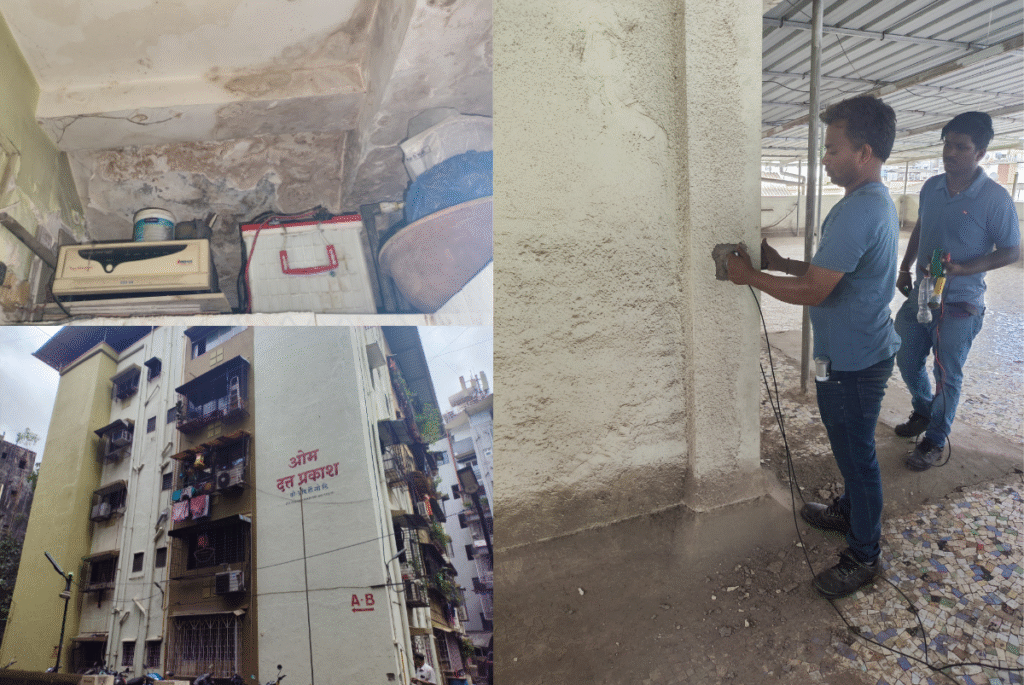
When Should a Structural Safety Audit Be Conducted
Timing matters in structural safety.
Delays often increase repair costs and safety risks.
A structural audit should be conducted:
- After 15 years of construction, then every 5 years
- Immediately after visible cracks, leakage, or corrosion
- Before major renovations or load changes
- Prior to redevelopment planning
- After natural events like earthquakes or flooding
Municipal guidelines often mandate audits for aging buildings.
Non-compliance may lead to penalties or notices.
Regular audits create a maintenance cycle.
They extend building life without sudden financial shocks.
Early assessment always costs less than emergency repair.
Key Steps in a Structural Safety Audit Process
A structured process ensures accurate results.
Each step builds on verified data.
Visual Inspection and Data Collection
This is the foundation of the audit.
Engineers inspect structural members, finishes, and service areas.
They record:
- Crack patterns and widths
- Signs of corrosion or spalling
- Dampness and water seepage
- Structural alterations
Drawings, soil reports, and past repair records are reviewed.
This helps understand original design intent.
Non-Destructive Testing Methods
Testing confirms internal conditions without damaging the structure.
Common tests include:
- Rebound Hammer Test
- Ultrasonic Pulse Velocity Test
- Half-Cell Potential Test
- Carbonation Depth Test
These tests measure concrete strength and steel condition.
They reduce guesswork and improve repair accuracy.
Structural Audit Report and Recommendations
The final report is the most valuable output.
It includes observations, test results, and risk grading.
Recommendations are practical and prioritized:
- Immediate safety measures
- Repair and strengthening methods
- Maintenance timelines
- Redevelopment suitability
Clear reporting supports decision-making for owners and societies.
Risks of Ignoring Structural Safety Audits
Ignoring structural audits has serious consequences.
Problems do not disappear on their own.
Common risks include:
- Sudden structural collapse
- Increased repair costs
- Legal liability for owners and committees
- Insurance claim rejection
- Loss of property value
Minor cracks often hide deeper issues.
Water ingress accelerates steel corrosion inside concrete.
Without audits, repairs remain reactive.
This leads to repeated failures and wasted money.
Structural safety is not optional.
It is a responsibility.
How Aavishkaar Consultants Supports Building Safety
Aavishkaar Consultants provides end-to-end structural solutions.
Each project is handled with precision and accountability.
Services Offered
- Structural Safety Audits
- Project Management Services (PMC)
- Building Repairs and Redevelopment Support
Audits are conducted by qualified structural engineers.
Reports are clear, actionable, and compliant with standards.
PMC services ensure repairs are executed correctly.
Quality, safety, and timelines are closely monitored.
For redevelopment projects, structural inputs reduce risk.
They support smoother approvals and planning.
Aavishkaar Consultants focuses on long-term building health.
Not temporary fixes.
Final Thoughts
A structural safety audit protects more than concrete and steel.
It protects people, assets, and peace of mind.
Buildings that are assessed regularly last longer.
They perform better and cost less to maintain.
If your building is aging or showing warning signs, act early.
Safety starts with assessment.
Frequently Asked Questions: Structural Safety Audits
1. What exactly is a structural safety audit?
A structural safety audit is a systematic health check for a building. It involves a professional evaluation of the building’s “bones”—specifically load-bearing components like columns, beams, slabs, and foundations. The goal is to detect signs of stress or deterioration before they lead to a dangerous failure.
2. My building is relatively new. Do I still need an audit?
Yes. While audits are vital for aging structures, new buildings benefit from them too. An audit on a newer structure verifies the quality of construction and ensures the building is set up for long-term safety. It’s better to catch a construction flaw in year two than a structural failure in year twenty.
3. What are the common “warning signs” an auditor looks for?
Auditors are trained to spot subtle signs of distress that a layperson might miss. Key indicators include:
Cracks: Deep or diagonal cracks in walls, beams, or columns.
Corrosion: Rusting of internal steel reinforcement (often seen as brown staining).
Leakage: Persistent dampness that can weaken concrete over time.
Settlement: Signs that the building foundation is shifting or sinking unevenly.
4. How often should a building be audited?
The general industry standard follows this timeline:
Initial Audit: Once the building reaches 15 years of age.
Routine Follow-ups: Every 5 years thereafter.
Emergency Audits: Immediately if you notice visible cracks, significant leakage, or after a major environmental event (like an earthquake).
5. Why is an audit considered a cost-saving measure?
It might seem like an added expense, but an audit acts as an early warning system. By identifying minor issues like minor corrosion or small leaks early, you can perform targeted repairs. This prevents “structural fatigue,” which leads to massive, expensive reconstruction projects or even total building loss later on.
6. What is the end result of a structural audit?
The process results in a Safety Roadmap. Instead of guessing which repairs are needed, the audit provides a clear, prioritized list of work. This helps housing societies and commercial owners plan budgets effectively, focusing on urgent structural repairs over purely cosmetic upgrades.
A structural safety audit is a critical process to evaluate the overall health, stability, and safety of a building, especially as it ages. It helps identify hidden structural issues such as cracks, corrosion, load-related weaknesses, and material deterioration before they turn into serious risks.
Regular structural audits not only ensure compliance with safety regulations but also help in planning timely repairs, extending the life of the structure, and safeguarding occupants. At SMCA, we strongly recommend periodic structural safety audits as a proactive step toward responsible building maintenance and long-term safety.