
Reinforced concrete is the backbone of modern construction. From residential buildings to commercial complexes, steel reinforcement bars (rebars) embedded inside concrete provide the tensile strength required to keep structures safe and stable.
However, when steel reinforcement begins to corrode, the very component that strengthens the structure turns into a source of deterioration. If not identified early, corrosion can significantly compromise structural integrity and may even lead to major failures.
This is where professional structural audits become essential.
What Causes Corrosion of Steel Reinforcement?
Steel inside concrete is naturally protected by the alkaline environment of concrete. Over time, this protection weakens due to:
- Water seepage and leakage
- Carbonation of concrete
- Chloride attack (common in coastal regions)
- Poor construction practices
- Inadequate concrete cover to reinforcement
- Structural cracks allowing moisture penetration
When oxygen and moisture reach the steel bars, corrosion begins. Rust expands up to 2–4 times the volume of steel, creating internal pressure that leads to:
- Cracks in beams, columns, and slabs
- Concrete spalling (surface breaking or flaking)
- Exposure of reinforcement
- Reduced load-carrying capacity
Why Corrosion Is a Serious Structural Risk
Corrosion is often invisible in its early stages. By the time cracks or exposed steel become noticeable, internal damage may already be advanced.
If ignored, corrosion can cause:
- Weakening of structural members
- Falling concrete pieces (safety hazards)
- Increased maintenance costs
- Shortened building lifespan
- In severe cases, partial or complete structural failure
Preventive action is always safer and more economical than emergency repairs.
How Structural Audits Prevent Major Failures
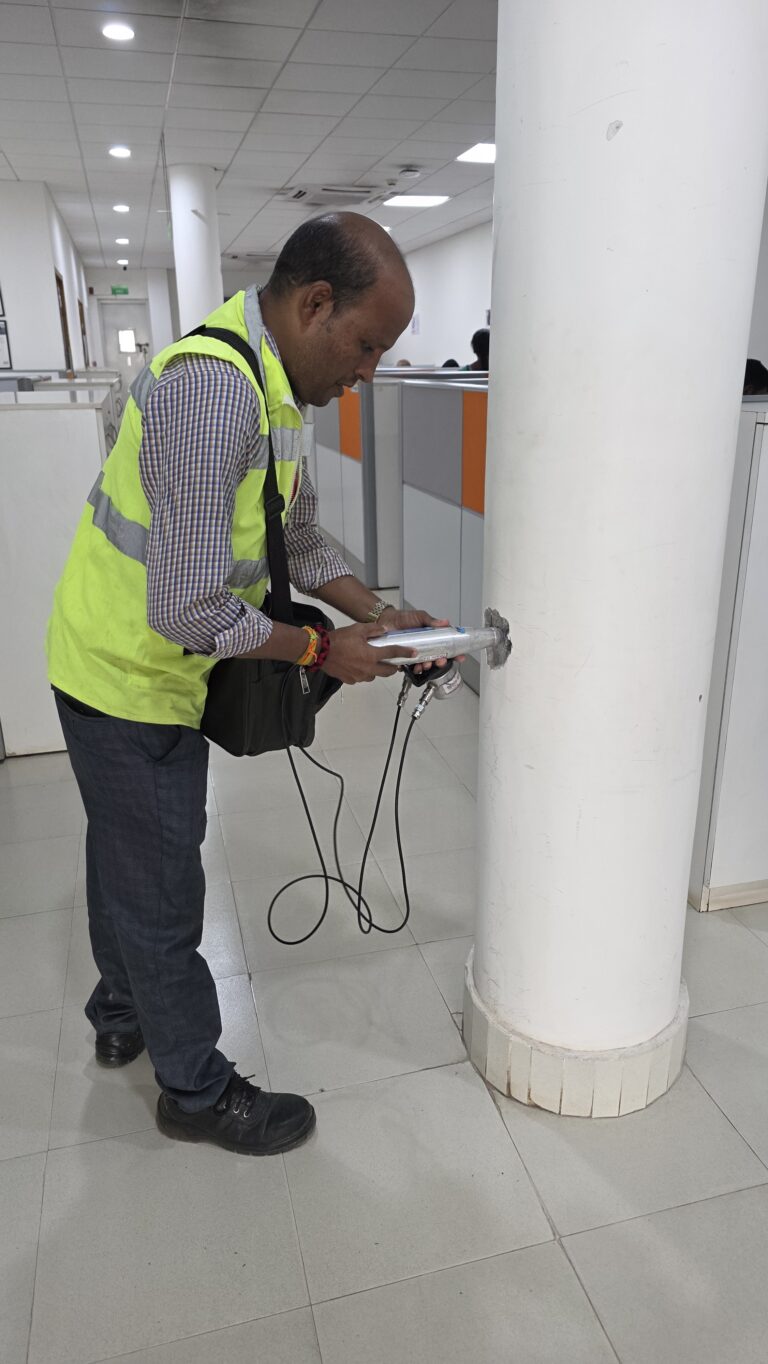
A structural audit is a detailed technical evaluation of a building’s structural health. It helps detect problems early and provides clear solutions.
1. Early Identification of Distress
Engineers inspect visible and hidden signs of:
- Cracks and seepage
- Rust staining
- Delamination
- Reduced concrete cover
- Structural deformation
2. Non-Destructive Testing (NDT)
Advanced methods assess internal concrete strength and reinforcement condition without damaging the structure.
3. Load & Stability Assessment
Structural capacity is evaluated to ensure the building safely handles existing and future loads.
4. Repair & Strengthening Strategy
Based on findings, engineers recommend:
- Anti-corrosion treatments
- Concrete repairs and restoration
- Jacketing and strengthening methods
- Waterproofing solutions
- Structural retrofitting (if required)
This structured approach prevents minor defects from turning into major failures.
Our Key Services
At Aavishkaar Consultants, we focus on delivering technically sound and practical solutions for structural safety.
✔ Structural Audits – Detailed building condition assessment
✔ Project Management Services (PMC) – Professional supervision and execution control
✔ Building Repairs & Redevelopment Support – Complete guidance from repair planning to project completion
From identifying hidden structural issues to managing full-scale repair or redevelopment projects, our team ensures your building receives the precise care it needs.
Frequently Asked Questions (FAQ)
1. How often should a building undergo a structural audit?
Generally, buildings above 15–20 years should undergo periodic structural audits. In many cities, audits are mandatory after a certain age. Regular inspections every 3–5 years are recommended for aging structures.
2. What are the early signs of reinforcement corrosion?
Common signs include cracks in concrete, rust stains on walls or ceilings, falling plaster, dampness, and exposed steel bars.
3. Is corrosion repair expensive?
The cost depends on the severity of damage. Early detection through audits significantly reduces repair expenses compared to major structural rehabilitation later.
4. Can corrosion completely weaken a building?
Yes. If left untreated, corrosion reduces the cross-section of steel reinforcement and weakens structural members, potentially leading to unsafe conditions.
5. Is a structural audit necessary if there are no visible cracks?
Yes. Many structural issues develop internally before becoming visible. A professional audit helps detect hidden risks early.
6. How long does a structural audit take?
The duration depends on the building size and condition. A standard residential building audit may take a few days for inspection and reporting.
Secure Your Structure Before It’s Too Late
Corrosion does not stop on its own — it progresses silently. A timely structural audit ensures safety, durability, and long-term savings.
📞 Contact: 9819845747
🌐 Website: www.structuralauditor.in
Aavishkaar Consultants
Engineering Safety. Ensuring Stability.